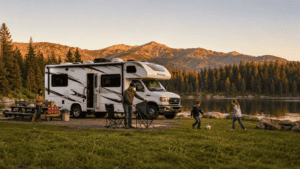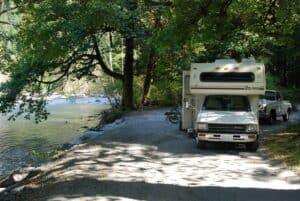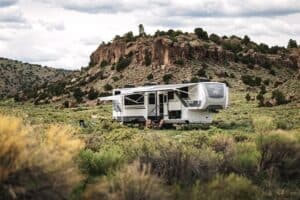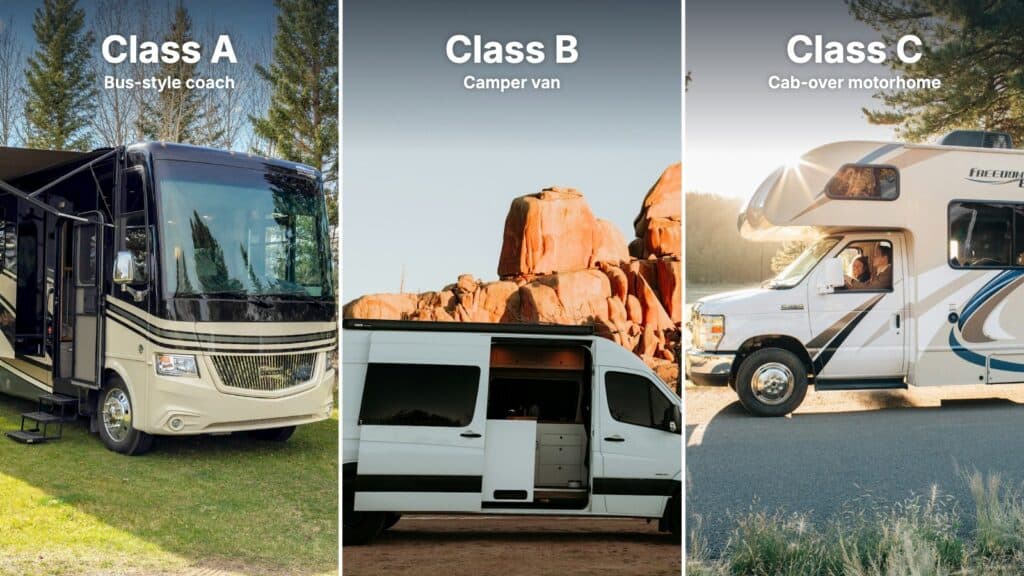
Class A vs B vs C comes down to size and trade-offs. A Class A is the big bus-style motorhome with the most space and the worst fuel economy, a Class B is a converted van that sleeps two to four and parks almost anywhere, and a Class C is the middle ground with an over-cab section that can hold a bed or storage.
For families and first-time owners a Class C is a sensible starting point, couples who move often should look hard at a Class B, and full-timers who want room are often best served by a Class A.
Below is what actually separates the three motorhome classes, with lengths, sleeping capacity, new prices, and fuel economy pulled from manufacturers, dealers, and industry groups. Where sources disagree, we give the range and say who said what. Numbers vary a lot by floorplan, so treat every figure here as a starting point, not a quote.
Class A vs B vs C at a glance
This table summarizes the typical ranges you will see quoted across manufacturer, dealer, and industry sources. The sections after it explain where each number comes from and why the ranges are so wide.
| Feature | Class A | Class B (camper van) | Class C |
|---|---|---|---|
| Body type | Bus-style coach built on a bare motorhome chassis | Van converted into living space | Coach on a cutaway truck or van chassis with a cab-over bunk or storage area |
| Typical length | About 20 to 45 feet | About 16 to 24 feet | About 20 to 38 feet |
| Typical sleeping capacity | 4 to 8 (some sources say up to 10) | 2 to 4 | 4 to 8 (Super C up to 10 to 12) |
| Fuel economy | About 6 to 10 mpg | About 18 to 25 mpg | About 10 to 15 mpg |
| Example new list price, or MSRP (as of November 2026) | From $208,885 (Winnebago Vista, gas) to $480,270 (Winnebago Journey, diesel) | From $161,560 (Thor Tellaro) to $183,783 (Winnebago Travato) | From $123,060 (Thor Four Winds) to $146,248 (Winnebago Minnie Winnie) |
| Parking | Hardest; tough to maneuver in tight spaces | Shorter models fit a normal parking space | Easier than a Class A, harder than a van |
| Towing a car | Common; Thor lists 8,000 to 15,000 lb towing capacity | Possible; Thor lists about 5,000 lb | Possible; Thor lists 5,000 to 12,000 lb |
| Best fit | Full-timers, retirees, large families | Solo travelers, couples, weekenders | Families, groups, first-time owners |
What defines each motorhome class?
The class letter tells you how the RV is built, not how fancy it is. Each class starts from a different kind of chassis (the frame, engine and running gear the living space is built on), and that one decision shapes the length, the interior space, and how the rig drives.
Class A: The bus-style coach
Thor Motor Coach describes a Class A as a motorhome where “the RV manufacturer builds the house on top of the raw chassis,” and notes that it looks like a tour bus. Camping World and Go RVing Canada both note that Class A coaches come with gas or diesel engines.
The rear-engine diesel models are the ones you will hear called diesel pushers; Winnebago, for example, sells its Journey as a Class A diesel pusher.
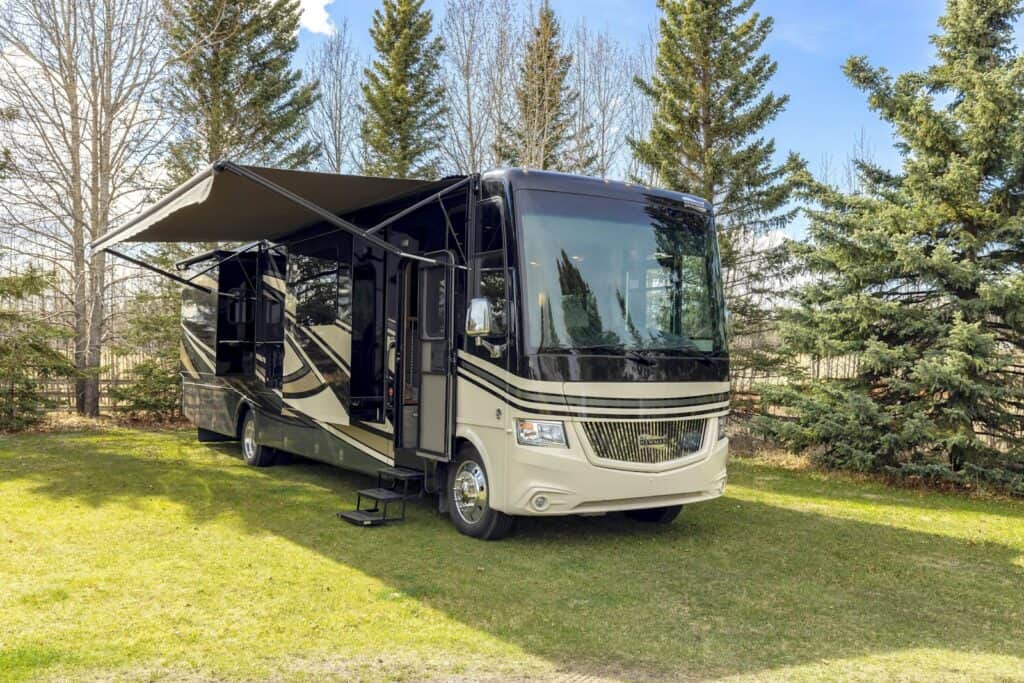
Length ranges vary by source. Thor puts Class A at 26 to 45 feet, Go RVing Canada at 21 to 40 feet, the Recreation Vehicle Dealers Association (RVDA) at 24 to 40 feet, and Camping World at 20 to more than 40 feet.
For sleeping, Thor says 6 to 8 people, Camping World says four to eight, and Autotrader says six to ten.
Class B: The camper van
Thor defines a Class B as “an automotive van that has been converted into a residential living space.” Both the Winnebago Travato and Thor Tellaro are built on the Ram ProMaster chassis.
Camping World lists Class B lengths of 16 to 24 feet, Thor says 17 to 24 feet, and Go RVing Canada says 16 to 21 feet.
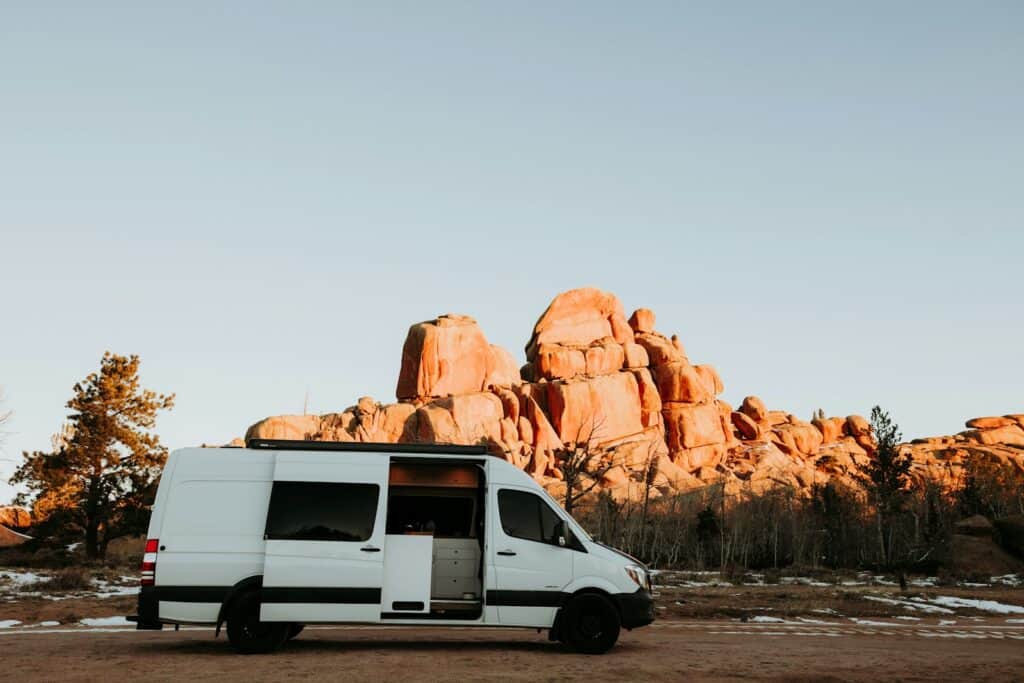
Sleeping space is the big limit. Camping World says all Class B motorhomes sleep at least two and some sleep up to four, and RVDA says they usually sleep two. Some models are strictly two-person rigs: Winnebago says the Travato sleeps up to two, and Thor lists the Tellaro’s sleeping capacity as 2.
Class C: The cab-over middle ground
Go RVing Canada says a Class C is “built on a commercial cut-away van chassis,” meaning a van front end with the rear cut away so the living area can be built on, and Camping World calls it a truck chassis with an overhang above the cab, which is often used as an extra bed or storage.
That overhang is a quick way to spot a Class C from the road. Thor’s Four Winds, for example, uses a Ford chassis.
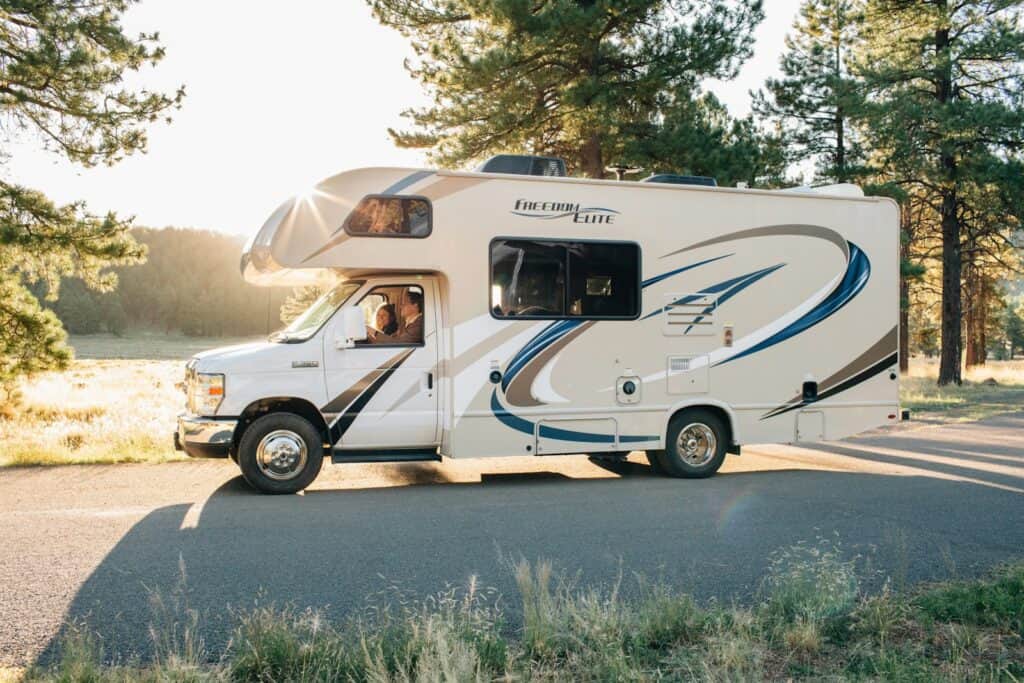
Lengths run from about 20 feet to the high 30s. RVDA says 20 to 31 feet, Thor says 24 to 38 feet, and Go RVing Canada says 25 to 35 feet, with larger Super C models, which use a heavier truck chassis, reaching nearly 40 feet.
Sleeping capacity runs from four to nine according to Camping World and 4 to 8 according to Thor, while Go RVing Canada says Super C models can sleep 10 to 12.
How much does each RV class cost new?
New motorhome prices span a huge range within each class, so manufacturer starting prices are the most reliable anchor. As of November 2026, these are the posted starting MSRPs on manufacturer sites. Winnebago notes its prices exclude freight, taxes, dealer prep, and other fees, so the out-the-door price depends on those charges and any dealer discount.
| Model | Class | Starting MSRP |
|---|---|---|
| Thor Four Winds (2027) | Class C | $123,060 |
| Winnebago Minnie Winnie | Class C | $146,248 |
| Thor Tellaro (2027) | Class B | $161,560 |
| Winnebago Travato | Class B | $183,783 |
| Winnebago Vista (gas) | Class A | $208,885 |
| Thor Hurricane (2027, gas) | Class A | $221,900 |
| Winnebago Journey (diesel pusher) | Class A | $480,270 |
Broader ranges from dealers and industry groups tell the same story. El Monte RV lists new Class A prices of $100k to $600k and up, Class C at $85k to $200k and up, and Class B at $80k to $160k (up to $300k).
Go RVing Canada lists Class A at $125,000 to $500,000 (and notes some models reach $1 million), Class B at $100k to $300k, and Class C at $120k to $250k, though its pages do not state a currency.
Which motorhome class gets the best gas mileage?
Class B wins easily, and Class A comes last. Lazydays puts Class A at 6 to 10 mpg, Class C at around 10 to 15 mpg, and Class B at 18 to 25 mpg. Cruise America gives nearly the same figures, except it puts Class B at 18 to 22 mpg.
Autotrader is a little more optimistic, citing 6 to 12 mpg for a gas Class A and 15 to 19 mpg for a Class C. Lazydays notes that engine type, weight, and driving habits all move the number, so a loaded rig in the mountains can do worse than these averages.
RVDA also points out that larger units cost more to rent and operate, which is worth remembering when you add up a long trip.
How hard is each class to drive and park?
A Class B is the most maneuverable of the three. RVDA says Class B vans are the width of a pickup truck and can parallel park in a typical city parking space, and Go RVing Canada says a Class B fits in a normal parking space. That makes grocery runs, trailheads, and city sightseeing simple.
A Class C sits in the middle. RVDA says a Class C is easier to drive and park than larger units, and Thor notes that many people like the Class C because it feels familiar, like their own car.
A Class A is the hardest; Autotrader says its size makes it tough to maneuver in tight spaces.
Some scenic roads simply ban big rigs. On Glacier National Park’s Going-to-the-Sun Road, the National Park Service prohibits vehicles and vehicle combinations longer than 21 feet or wider than 8 feet between Avalanche Creek and Rising Sun.
A compact camper van may squeak under the 21-foot length limit, but the 8-foot width limit counts mirrors, so measure across them before you plan on that road.
Thor’s Class A range (26 to 45 feet) and Class C range (24 to 38 feet) both start above the limit, so most of those motorhomes are too long. There are exceptions, though: Thor’s own Four Winds 19Z, a Class C, is listed at 20 feet 5 inches.
Will your RV fit the campsite?
Length limits can be tight at national park campgrounds, and some count the motorhome and any towed car together. Yellowstone’s campground table, for example, lists an RV plus vehicle maximum of 25 feet at Lewis Lake, 30 feet at Slough Creek and Tower Fall, 35 feet at Indian Creek, and 40 feet at Canyon.
A Class B fits nearly anywhere on that list. A mid-size Class C fits most of them, while a long Class A towing a car will be shut out of several and limited to larger campgrounds like Bridge Bay or Madison (60 feet), Grant Village (50 feet) or the Fishing Bridge RV Park (95 feet).
Always check the posted limit for the specific campground before you book.
Can you tow a car behind a motorhome?
Yes, and with a Class A it is almost standard practice. Autotrader says most Class A owners tow a vehicle behind their RV, often called a “toad,” and Go RVing Canada pitches the Class A as a way to bring your car along for day trips once the motorhome is parked.
Thor lists towing capacity of 8,000 to 15,000 pounds for Class A, 5,000 to 12,000 pounds for Class C, and about 5,000 pounds for Class B. Those are broad class ranges, so check the exact model and its loaded weight.
Towing changes your trip, though. It adds length that counts against campground limits, and it means unhooking and hooking up at each stop. If you do not need a second vehicle, a smaller motorhome you can drive to dinner is often the simpler choice.
Which RV class suits you?
Match the class to who is coming and how long you will be out, not to the floorplan that looks best at the dealer. Here is how the main sources line up.
- Couples: Camping World recommends Class B for couples, and RVDA calls it a flexible option, especially for two people. A small Class C also works well for couples who want a real bed and more storage.
- Families: Go RVing Canada calls the Class C “perfect for families and groups of friends,” and El Monte RV says it suits families of four to five. If your family is bigger, look at a Super C or a Class A.
- Full-timers: El Monte RV says Class A is best for large families, retirees, or full-time travelers, and Go RVing Canada calls it perfect for long-term family road trippers. The extra storage and living space matter more the longer you stay out.
- Weekenders: Go RVing Canada describes the Class B as a flexible RV for both the weekend warrior and the long-term traveler. A van you can park in your driveway and take out on a Friday afternoon is hard to beat for short trips.
If you are still deciding by family size, our guide to the best RVs for a family road trip walks through layouts for kids. New to RVs entirely? Our start here page covers the basics.
Class A vs B vs C pros and cons
Every class wins something and gives something up. These are the trade-offs that come up again and again in the sources above.
Class A
The Class A is the roomiest and most luxurious motorhome, and the most demanding to own and drive.
Pros
- Most interior and storage space
- Sleeps the most people in many floorplans
- Highest towing capacity for bringing a car
Cons
- Lowest fuel economy of the three
- Hardest to park and maneuver
- Shut out of some campgrounds and scenic roads
Class B
The Class B is the easiest to live with day to day, as long as you can live small.
Pros
- Best fuel economy
- Shorter models fit a normal parking space
- Fits almost every park and campground
Cons
- Usually sleeps two, sometimes four
- Can cost more than a larger Class C
- Limited storage for long trips
Class C
The Class C is the compromise pick, with a good balance of space, cost, and drivability.
Pros
- Room for a family, often with a cab-over bed
- Easier to drive and park than a Class A
- Lowest starting prices in our manufacturer examples
Cons
- Fewer features, space, and privacy than larger units, per RVDA
- Fuel economy well below a Class B
- Longer models still hit campground limits
Why you should rent before you buy
The fastest way to settle Class A vs B vs C is to spend a few nights in one. A weekend in a rented Class C will tell you more about bed size, bathroom space, and parking stress than any spec sheet. With new motorhomes listed from about $80,000 and up, a rental is cheap insurance against buying the wrong class.
Our guide to renting before you buy explains how to plan a test trip, and our breakdown of RV rental costs shows what to budget. When you know which class you are leaning toward, our RV rental guide compares where to rent one.
Test-drive a class before you commit
Rent the class you are leaning toward for a long weekend and see how it handles real roads, real campsites, and your real crew.
Read the rent-before-you-buy guide