If you are renting one RV for the whole family, a Class C motorhome is the safe pick: it sleeps four to eight, drives like an oversized van, and needs no separate tow vehicle. But it is not the only good answer, and for some families, it is the wrong one.
Renting is the smartest way to start. You get the exact rig your trip needs without a loan, a driveway full of RV, or a five-figure mistake. The trick is matching the type to your family: how many people are sleeping, whether you want to drive the whole thing or tow it, and how much of your budget goes to the rig versus the trip itself.
Below are the five RV types worth renting for a family road trip, who each one suits, roughly what it rents for, and a commonly available model to search for on the peer-to-peer platforms. Prices are typical 2026 nightly rates on RVshare, Outdoorsy, and RVezy, before fees and insurance. For a full budget, see our RV rental cost breakdown.
How to pick the right family RV
Four questions sort almost every family into the right rig. Answer these before you start browsing listings.
- How many people are sleeping, really? Count everyone, then add one. A unit that “sleeps six” is comfortable for four adults or two adults and three kids. Bunk beds and a convertible dinette make the difference between a restful trip and a cramped one.
- Do you want to drive it or tow it? A motorhome (Class A, B, or C) is one vehicle you drive and sleep in. A towable (travel trailer or fifth wheel) is cheaper and gives you a car at camp, but you need a tow vehicle rated for the weight and the nerve to back up a trailer.
- How new does it need to be? Newer rigs cost more per night but are cleaner, more reliable, and less likely to leave you troubleshooting a furnace on night one. For a first family trip, pay a little more for a well-reviewed, recent unit.
- What is your nightly budget? The rig is only part of it. Add campground fees, fuel, insurance, and a mileage or generator package, and a realistic all-in day runs $150 to $400. Renting a smaller rig you can actually afford beats stretching for a big one.
The best RVs to rent for a family road trip
Here are the five types worth renting, ordered roughly from the easiest, most flexible family pick to the most specialized. Start at the top and stop when you reach the one that fits your crew and your tow situation.
1. Class C motorhome: The best all-rounder
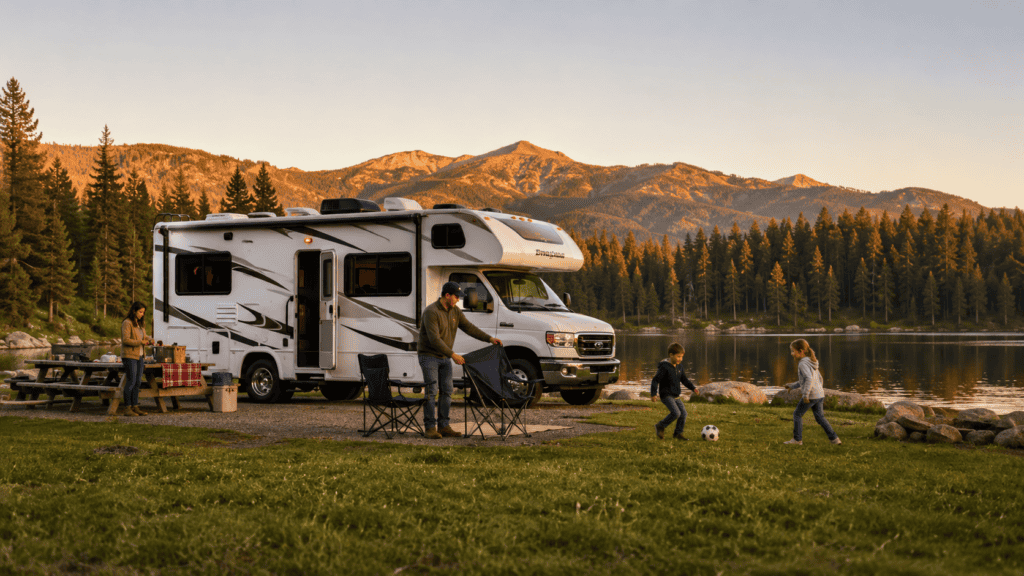
The Class C is the family rental for a reason. You get a real bedroom in the back, a bathroom, a kitchen, and that signature over-cab bunk the kids will fight over. It drives on a normal license, handles like a big van, and everyone rides together with seatbelts. It is the least stressful way to cover a lot of miles with children who need snacks, screens, and a bathroom without stopping.
Pros
- Easy to drive, no towing
- Over-cab bunk sleeps kids
- Bathroom and kitchen on board
- Everyone rides together
Cons
- No separate car once you park
- Fuel economy is modest
- Newer units get pricey
Class C motorhome (example: Jayco Redhawk or Thor Four Winds)
Typical rent: about $100 to $250 a night. The default choice for a family of four to six who want simple and self-contained.
Check availability ›2. Bunkhouse travel trailer: The best value and space per dollar
If you already own an SUV or truck that can tow, a bunkhouse travel trailer is the most family space for the least money. The “bunkhouse” layout puts a private bedroom up front for parents and a dedicated set of bunks for the kids, often with a convertible dinette on top of that. You unhitch at the campground and keep your car for grocery runs and day trips. The catch is the tow vehicle: check its rating against the trailer’s loaded weight, and be honest about whether you are ready to reverse a trailer into a site.
Pros
- Most sleeping space for the price
- Keep your car at camp
- Separate kid and parent zones
Cons
- Needs a properly rated tow vehicle
- Towing and backing up take practice
- No bathroom access while driving
Bunkhouse travel trailer (example: Keystone Coleman or Jayco Jay Flight)
Typical rent: about $60 to $150 a night, plus your own tow vehicle. Ideal for families who already own a capable truck or SUV.
Check availability ›3. Class A motorhome: The best for big families who want room
A Class A is the big bus-style motorhome, and it earns its keep when you have a large family or you simply want the space to spread out. Wide slide-outs, a full residential kitchen, and often a bunk area or a convertible sofa mean six or more people are not living on top of each other. It is the most comfortable way to travel as a crowd. It is also the most intimidating to drive, the thirstiest at the pump, and the priciest per night, so it makes the most sense for families of five to eight taking a longer trip.
Class A motorhome (example: Thor A.C.E. or Winnebago Vista)
Typical rent: about $150 to $350 a night. Worth it when you need genuine room and are comfortable driving something large.
Check availability ›4. Class B campervan: The best for small families and easy driving
A Class B is a camper van: compact, nimble, and the closest thing to just driving your car. For a family of three or four, especially with a pop-top roof that adds a second sleeping berth, it is a joy on winding roads and in tight national-park campgrounds where the big rigs cannot fit. The trade-off is obvious: space. Bathrooms are tiny or wet-bath style, and there is nowhere to escape a cranky toddler. Rent one for a shorter, adventure-first trip rather than a two-week haul with a big family.
Pros
- Easiest of all to drive and park
- Fits small campgrounds and trailheads
- Better fuel economy
Cons
- Tight for more than four
- Small or wet-bath bathroom
- Little indoor living space
Class B campervan (example: Winnebago Solis or Travato)
Typical rent: about $100 to $250 a night. Great for a family of three or four who value easy driving over living space.
Check availability ›5. Fifth wheel: The most space, but not a first-timer rental
A fifth wheel is a towable that hitches into the bed of a pickup, and it offers the most residential space of anything here: multi-level floorplans, big bunk rooms, sometimes a second bathroom. Families who full-time love them. For a first rental, though, we usually steer families away, because towing a fifth wheel needs a large, properly equipped pickup truck that most people do not own, and it is the hardest type to maneuver. Consider it only if you already tow with a capable truck and want maximum room.
Fifth wheel (example: Grand Design Reflection or Jayco Eagle)
Typical rent: about $75 to $200 a night, and you must own a large pickup to tow it. Best for experienced families who want room to spread out.
Check availability ›Family RV rental types compared
Here is how the five types stack up at a glance on the numbers that matter most for a family: how many they sleep, what they rent for a night, and who each one is really for.
| Type | Sleeps | Typical nightly rent | Best for |
|---|---|---|---|
| Class C motorhome | 4 to 8 | $100 to $250 | Most families; easiest all-rounder |
| Bunkhouse travel trailer | 5 to 8 | $60 to $150 | Value, if you own a tow vehicle |
| Class A motorhome | 6 to 8 | $150 to $350 | Big families wanting room |
| Class B campervan | 2 to 4 | $100 to $250 | Small families; easy driving |
| Fifth wheel | 6 to 10 | $75 to $200 | Experienced families with a big truck |
What it really costs, beyond the nightly rate
The sticker price is only the start. Budget for these extras so the final bill does not surprise you: mileage overage runs about $0.35 to $0.50 per mile unless you buy an unlimited package, rental insurance adds roughly $15 to $50 a day, and a generator package, cleaning fee, or pet fee can each tack on more. Add fuel and campground fees, and a realistic all-in day lands between $150 and $400 depending on the rig. Our RV rental cost guide breaks down a real week-long trip line by line.
Where to rent a family RV
All three of the major peer-to-peer marketplaces rent from private owners, which means more variety and better prices than the old fleet-rental companies. Search the same dates on more than one, because the exact same rig can be listed on different platforms:
- RVshare: The largest US marketplace, with the deepest inventory of family Class C motorhomes and bunkhouse trailers. Search RVshare.
- Outdoorsy: A close competitor with strong insurance and roadside coverage built in. Search Outdoorsy.
- RVezy: Well worth checking, especially for trips in or into Canada. Search RVezy.
For a side-by-side on fees, insurance, and how each one handles a problem, see our full RVshare vs Outdoorsy vs RVezy comparison.
The bottom line
For the great majority of families, rent a Class C motorhome: it is the simplest, most flexible way to travel together and sleep the kids. If you already own a truck or SUV that can tow, a bunkhouse travel trailer stretches your budget further and keeps a car at camp. Save the Class A for big crews who want room, the Class B for small families chasing easy driving, and the fifth wheel for experienced towers only. Match the type to your family first, then find the newest well-reviewed unit you can afford, and the trip takes care of itself.