The RV mods and upgrades most worth doing are the ones that buy the most comfort and self-sufficiency for the money: swap to LED lights and a high-pressure shower head, add a powered roof vent fan and a better mattress, protect your rig with a surge protector and a water filter, and, for off-grid camping, add solar and a lithium battery. Start with the cheap high-impact ones and work up.
RV upgrades run from twenty-dollar tweaks to thousand-dollar systems, and the best ones punch far above their price. The trick is knowing which actually improve your trips and which just drain your wallet.
Below are the mods worth doing, grouped from cheapest to biggest, plus an honest list of the ones we would skip.
Cheap upgrades with the biggest payoff
These cost little, install in minutes, and you notice them immediately. If you do nothing else, do these.
- LED light bulbs: Swapping the factory incandescent bulbs for LEDs is the classic first mod. They are brighter, run far cooler, and draw a fraction of the power, which matters when you camp off batteries.
- A high-pressure shower head: RV showers are notoriously weak. An Oxygenics shower head boosts pressure while using less water, so your tank lasts longer and the shower is actually good.
- A water pressure regulator: Cheap insurance for your plumbing. A brass pressure regulator keeps high campground pressure from bursting your lines. Screw it on every time.
- A mattress topper and better bedding: A memory foam topper transforms the thin factory mattress for a fraction of the cost of replacing it, at least until you upgrade the mattress itself.
Comfort upgrades worth the money
These cost more but pay you back in better sleep and a livable rig, especially if you camp often or full-time.
- A new mattress: The factory mattress is the most common upgrade for a reason. See our best RV mattress by size guide, and remember RV sizes are non-standard, so measure first.
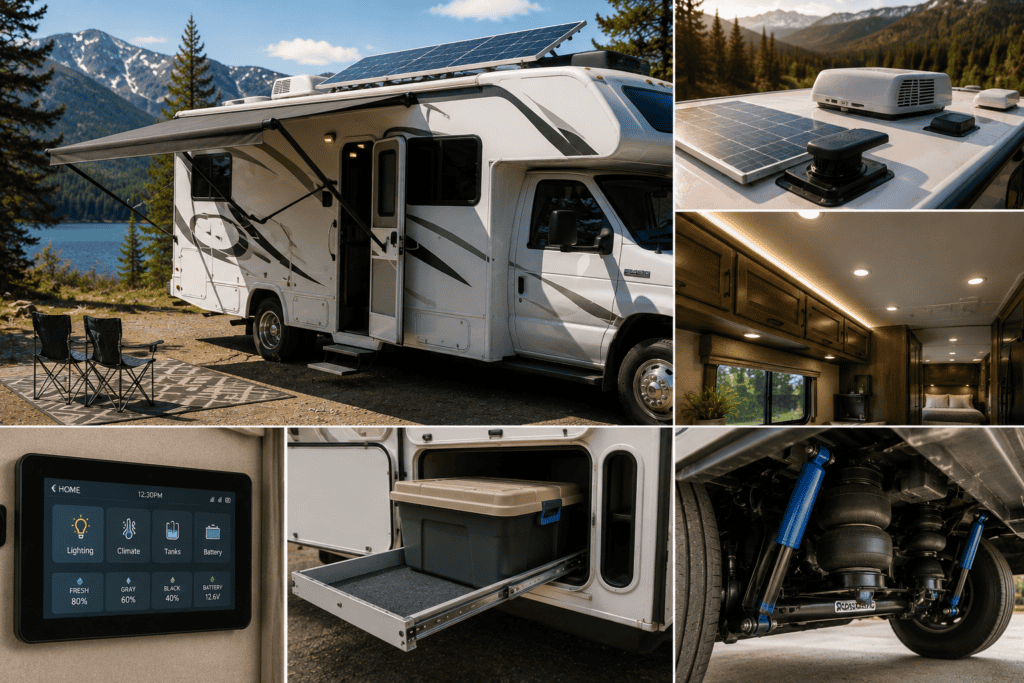
- A powered roof vent fan: One of the best comfort upgrades there is. A MaxxAir MaxxFan pulls hot air out and fresh air in, cuts condensation, and can keep you comfortable without running the air conditioner, even in the rain thanks to its built-in cover.
- Insulation and window covers: Reflective window covers and vent insulators keep the rig cooler in summer and warmer in winter, and they are cheap to add.
Power and off-grid upgrades
These are the big-ticket projects, and they are what turn a rig that needs hookups into one that can camp anywhere. Do them in order: protection first, then generation and storage.
- A surge protector: The first electrical upgrade, before anything else. It guards your rig from bad campground power. See our best RV surge protector guide.
- Solar power: Keeps your batteries charged from the sun so you can boondock without a generator. Our best RV solar kits guide covers sizing and setup.
- A lithium battery: Replacing lead-acid with a LiFePO4 lithium battery is a game-changer: far more usable power, lighter weight, and thousands of charge cycles. It is the upgrade full-timers rave about, and it pairs with solar.
Water upgrades
Small plumbing upgrades protect your health and your rig for very little money. Two are worth doing on any RV.
- A water filter: Cleans campground water before it reaches your tank and tap. See our best RV water filter guide for inline versus canister options.
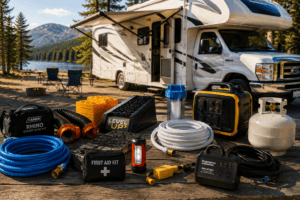
- Quick-connect hose fittings: Cheap brass or plastic quick-connects on your water hose make hooking up and unhooking a two-second job instead of a cold-fingered chore.
Safety and tech upgrades
These protect you on the road and keep you connected. The first one is a genuine safety buy, not a luxury.
- A tire pressure monitoring system: A TPMS watches every tire’s pressure and temperature as you drive and warns you before a slow leak becomes a blowout, which is one of the most common and dangerous RV failures.
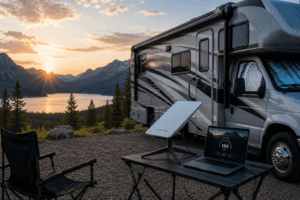
- Starlink internet: Real internet at remote campsites, for streaming or working from the road. See our Starlink for RVs guide.
- A cell booster: If you rely on cellular, a booster pulls in a usable signal where your phone shows one weak bar. It pairs well with Starlink as a backup.
Organization mods that cost almost nothing
RVs are short on storage, and a handful of dollar-store fixes make a surprising difference. None of these needs tools.
- Command hooks and tension rods: Hang keys, towels, and tools on wasted wall space, and use tension rods to stop items sliding around in cabinets while you drive.
- Cabinet and drawer organizers: Bins and dividers keep the galley from becoming a jumble on travel days.
- Collapsible gear: Fold-flat buckets, bowls, and bins reclaim the space every RVer runs short on. See our must-have RV accessories for our picks.
Mods that usually are not worth it
Not every popular upgrade earns its price, and part of our job is saying so. Here is where we would keep your money in your pocket.
- Bargain-brand power gear: A cheap no-name lithium battery, inverter, or solar controller is the one place not to save. Buy quality here, because failures are expensive and sometimes dangerous.
- Single-use gadgets: The clever gizmo you will use once lives in a bin forever. If it solves a problem you do not actually have, skip it.
- Heavy cosmetic remodels on a rig you may sell: Deep custom renovations rarely come back to you at resale. Improve comfort and function first; redecorate only if you are keeping the rig for the long haul.
- Anything that voids a new rig’s warranty for little gain: Check before you cut or drill on a rig still under warranty, and weigh the payoff.
The bottom line
Upgrade in order of value. Start with the cheap wins that you feel immediately (LED lights, a good shower head, a pressure regulator, a mattress topper), then spend on comfort like a real mattress and a powered vent fan.
Save the big money for the upgrades that change how you camp: a surge protector, solar, and a lithium battery for off-grid freedom, plus a TPMS for safety. Skip the bargain power gear and the single-use gadgets, and your rig gets better every trip without wasting a dollar.
Ready to dig into any of these? Browse all our RV gear guides for the tested picks in each category.