So you’re thinking about RVing. Maybe you’ve been watching vans and campers roll past on the highway, maybe your family wants a trip that doesn’t involve an airport, or maybe you’re quietly wondering whether you could live on the road one day.
Wherever you’re starting from, this page is your map. It covers the handful of things every new RVer needs to know, then points you to the deeper guides when you’re ready for them.
Here’s the reassuring part up front: Getting into RVing is easier and less expensive than it looks, and you do not have to buy anything to begin.
The best advice I can give a beginner: Rent before you buy
If you take one thing from this whole page, take this. Before you spend tens of thousands of dollars on an RV, rent one for a weekend or a week. It is the single fastest way to learn what you actually like, and it will save some people from a very expensive mistake.
A few days in a rental teaches you things no article can: Whether you want to drive a big motorhome or tow a trailer, how much space your family really needs, whether you love the lifestyle or just love the idea of it. Rentals go through peer-to-peer platforms like RVshare, Outdoorsy, and RVezy, which work a lot like Airbnb for RVs. You pick a rig near you, book it, and pick it up from its owner.
The types of RVs, in plain English
RVs come in two big families: Motorhomes you drive, and towables you pull behind a truck or SUV. Here is the quick version so the jargon stops being confusing.
- Class A motorhomes are the big bus-style rigs. Roomy and comfortable, but large to drive and thirsty on fuel.
- Class B motorhomes are camper vans. Easy to drive and park, great for couples, tighter on living space.
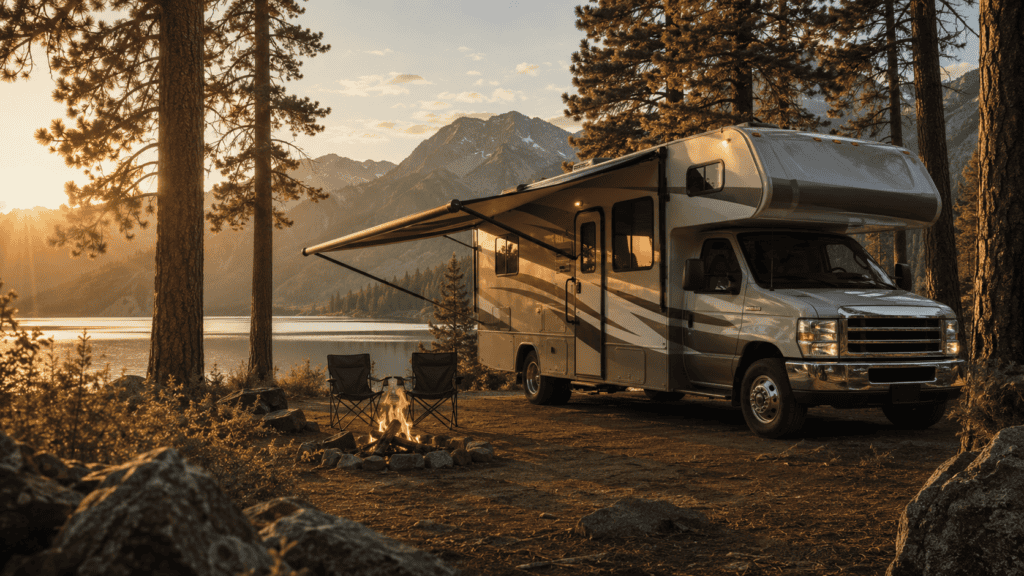
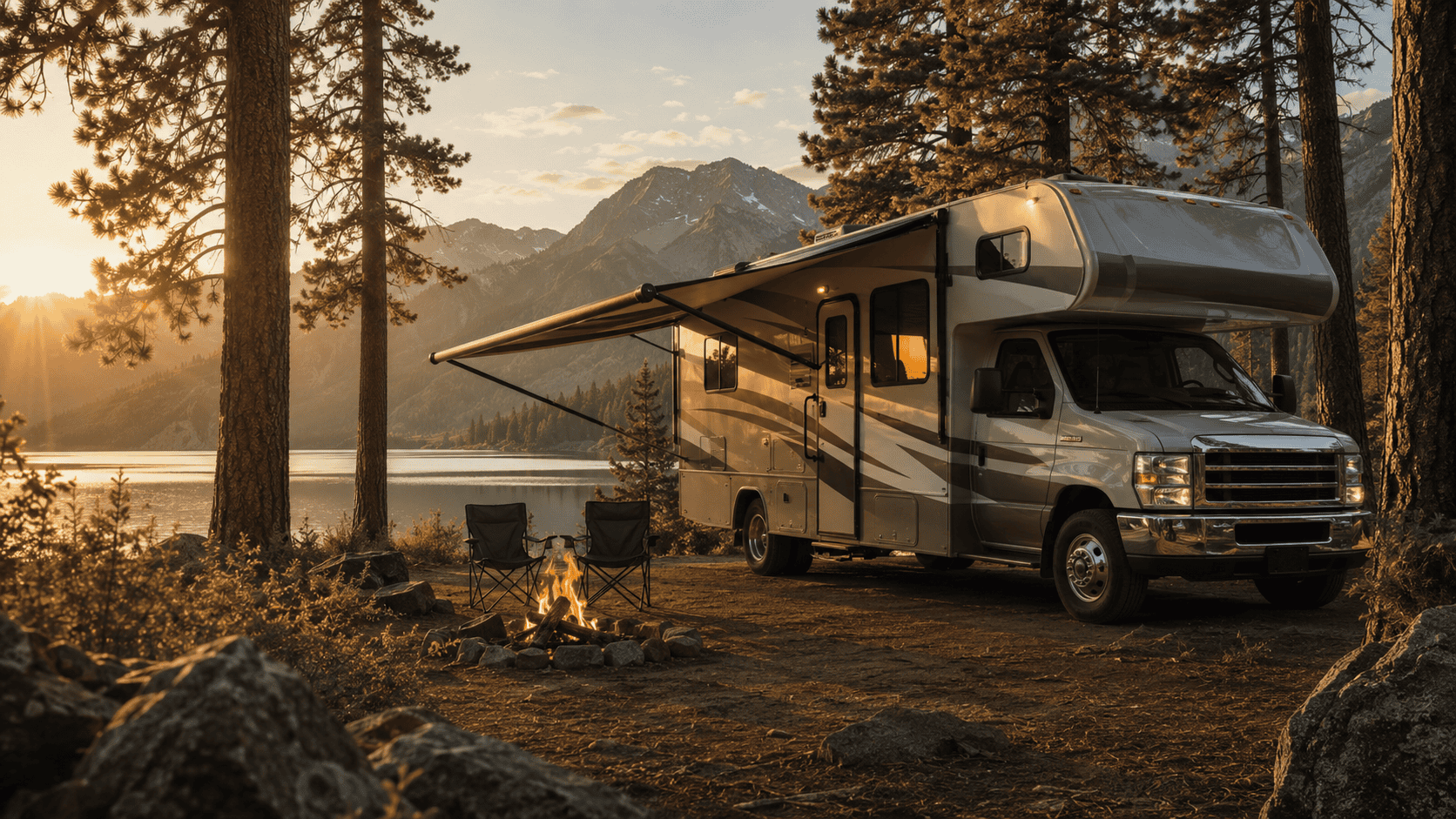
- Class C motorhomes are the middle ground, built on a truck-style cab with a bed over the front. A popular first choice for families.
- Travel trailers are towables that cover a huge range of sizes and prices. Often the best value for a first RV.
- Fifth wheels are larger towables that hitch into the bed of a pickup. Spacious and stable, but they need a capable truck.
Which one fits you depends on your budget, what you already drive, and how many people are coming along. When you’re ready to go deeper, read how to choose the right RV and our breakdowns of Class A vs B vs C and travel trailer vs fifth wheel.
What it actually costs
Costs vary a lot, so think in ranges rather than a single number.
Renting is the cheapest way in. In peak summer, you’ll usually see travel trailers around $75 to $130 a night, Class C motorhomes around $150 to $200, and larger Class A rigs from $200 up. Add fuel, campground fees, and any mileage or generator charges on top. Our guide on how much it costs to rent an RV breaks it down.
Buying is a bigger commitment. Used travel trailers can start in the low thousands, while new motorhomes run well into six figures. Beyond the sticker price, budget for insurance, storage, maintenance, and the tow vehicle if you go with a trailer. When you’re closer to buying, our guide on how much an RV costs and our used RV inspection checklist will keep you from overpaying.
The gear you actually need to start
New RVers tend to overbuy. You do not need a garage full of accessories for your first trip. A short, sensible starter kit covers almost everything:
- A surge protector to keep campground power from frying your electronics
- A drinking-water hose and a basic water filter
- A sewer hose and gloves for emptying tanks
- Leveling blocks and wheel chocks
- The usual camp basics: Chairs, a first-aid kit, and a flashlight
That’s genuinely enough to start. You can add solar, better internet, and comfort upgrades once you know how you camp. Our essential RV gear guide walks through the must-haves, and when you’re ready to go off-grid, see our guides to RV solar kits and Starlink for RVs.
Where you’ll actually sleep
You have more options than you might think. Developed campgrounds and RV parks give you hookups for power, water, and sewer, plus amenities like showers and laundry. National and state parks offer beautiful, simpler sites that book up fast in summer. And boondocking, which means camping off-grid with no hookups on public land, is free and wonderful once you’re set up for it.
Two memberships are worth knowing about early. Harvest Hosts lets you stay overnight at wineries, farms, and breweries, and Thousand Trails offers a network of campgrounds for a flat membership. Start with our where to camp guide, our Harvest Hosts review, and our beginner’s guide to boondocking.
Keeping it running: The basics beginners miss
An RV is part vehicle and part home, which means a little upkeep goes a long way. The two things first-timers most often skip are winterizing (protecting your plumbing before a hard freeze) and simple seasonal checks on the roof, seals, tires, and battery. Neglect those and you can turn a cheap fix into an expensive one.
You do not need to be a mechanic. Our RV maintenance 101 guide covers the essentials, and our step-by-step winterizing walkthrough is the one to bookmark before your first cold season. If a system acts up mid-trip, our troubleshooting guides cover the common culprits like the furnace, fridge, and air conditioner.
Weekend trips or life on the road?
Most people start with weekends and holidays, and that’s a perfect way to enjoy an RV for years. Some catch the bug and go further, working remotely from the road or living full-time. Full-timing is very doable, but it comes with real questions around budgeting, insurance, mail, and internet that are worth understanding before you sell the house.
If that’s on your mind, read what full-time RV living actually costs and our honest guide to full-time RV living. No pressure either way. The best RV life is the one that fits your actual life.
Your next step
Here’s the simple path from here:
- Rent an RV Book one for a weekend and see what you like.
- Figure out your type and budget Use the buying guides to narrow it down.
- Pack the starter gear Take a short first trip close to home.
- Grow from there Better gear, longer trips, or eventually buying, at your own pace.
Grab the free RV starter checklist
It’s the printable version of everything above: What to pack, what to check, and what to set up before your first trip. Drop your email in the box below and we’ll send it over.