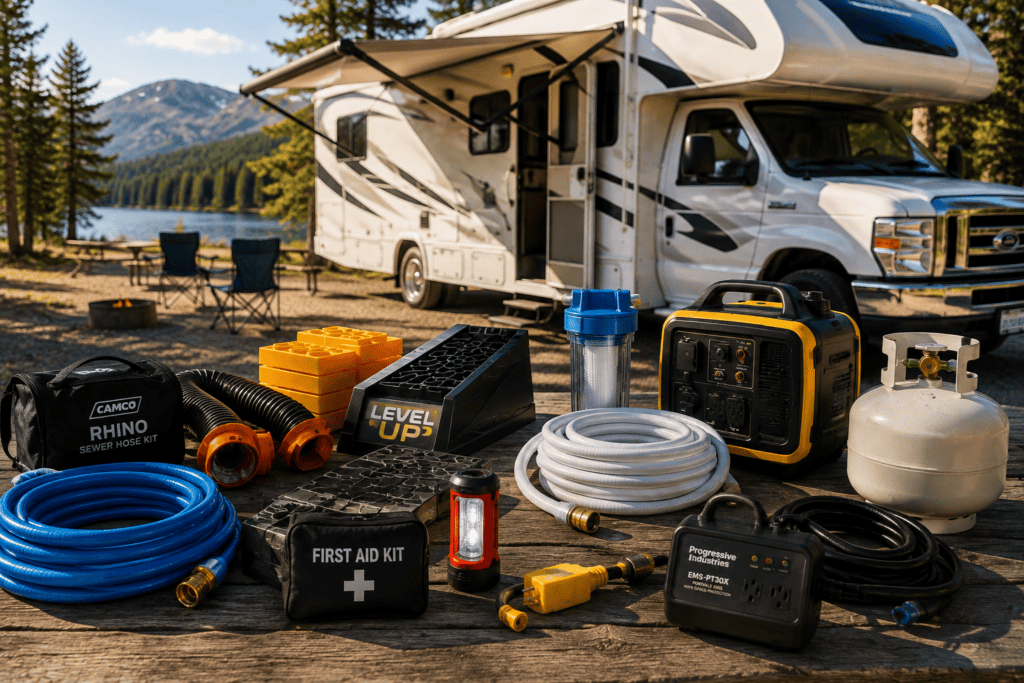
The must-have RV accessories for beginners are the ones that protect your rig and make setup work: a surge protector, a water pressure regulator, a drinking-water hose and filter, a sewer hose kit, leveling blocks, and wheel chocks. Add RV-safe toilet paper and a tank treatment, and you have everything you need to camp comfortably on your first trip.
A new RV does not come with the gear you need to actually use it. The dealer hands you the keys, but the hoses, adapters, and protection are all on you.
The good news: the real essentials are a short, affordable list, and buying the right ones up front saves you a miserable first trip. Here is the beginner checklist, grouped by system, with our top picks and links to the full guides.
Electrical essentials
Campground power is not always clean or correctly wired, and a bad pedestal can fry your electronics. These two items stand between the post and your rig.
- Surge protector: The single most important buy. It guards against power surges and warns you of miswired pedestals before they damage your rig. See our guide to the best RV surge protector for the right one for your setup.
- A power adapter (dogbone): Lets you plug into a pedestal that does not match your rig’s plug, which happens often. Get the right adapter for your amperage (30-amp and 50-amp rigs need different ones), so you are never stuck at a post you cannot use.
Water essentials
Your rig’s plumbing is easy to protect and easy to damage. Three cheap items keep your water safe to drink and your pipes safe from bursting.
- A water pressure regulator: The most overlooked must-have. Campground water pressure can spike high enough to split your lines, and a brass pressure regulator holds it to a safe level. Screw it on first, every time.
- A drinking-water hose: A potable (white or blue) drinking-water hose, never a garden hose, which is not safe for drinking water. Keep it separate from any hose you use for the sewer rinse.
- A water filter: A simple inline filter screws onto the hose and cuts sediment and chlorine taste. For the full range from inline to canister, see our best RV water filter guide.
Sewer and dump essentials
Nobody’s favorite topic, but the dump station is unavoidable, and the right kit keeps it clean and quick. Do not cut corners here.
- A sewer hose kit: The link between your tanks and the dump inlet, and the one thing you do not want to fail. Our best RV sewer hose guide covers the top kits and how to dump without a mess.
- Disposable gloves: Keep a box in your dump kit and use a fresh pair every time. Cheap, and you will be glad to have them.
- RV-safe toilet paper: Fast-dissolving RV toilet paper breaks down so it will not clog your black tank or the sensors.
- A holding tank treatment: A tank treatment controls odor and breaks down waste and paper, which keeps your tanks and sensors working right.
Leveling and setup essentials
A rig that sits level and does not roll is safer and far more comfortable. Two inexpensive items handle both.
- Leveling blocks: Stackable blocks (or a drive-on leveler) get your rig flat side-to-side, which keeps the fridge working and the doors and slides operating right. See our best RV leveling blocks guide.
- Wheel chocks: They keep the rig from rolling while you set up, a safety must, not an optional. An X-Chock stabilizer also cuts the side-to-side rock on tandem-axle trailers.
Safety must-haves
These are the items you hope never to need and cannot skip. Check them before your first trip and once a season after that.
- A fire extinguisher: Rigs come with a small one, but add a second rated for kitchen and electrical fires, and know where both are.
- Working detectors: Confirm the smoke, carbon monoxide, and propane alarms all work and have fresh batteries. Never assume a used rig’s alarms are good.
- A first aid kit and a tire pressure gauge: A basic first aid kit for the inevitable scrapes, and a gauge to check your tires before every trip, since underinflated RV tires are a common cause of blowouts.
Nice-to-haves once you are set up
These are not strictly essential, but they make life on the road easier and tend to be the next things beginners buy. Add them as you go.
- An outdoor mat: A reversible outdoor mat keeps dirt and grass out of the rig at the door.
- A headlamp or lantern: A rechargeable headlamp gives you hands-free light for hooking up after dark.
- A basic tool kit: A small household tool kit with a screwdriver set, pliers, a socket set, and duct tape handles most small fixes.
- Collapsible gear: Fold-flat collapsible buckets, bowls, and bins save the storage space every RVer runs short on.
As you get more advanced
Once the basics are covered, two upgrades unlock camping away from hookups. Neither is a first-trip purchase, but both are worth knowing about.
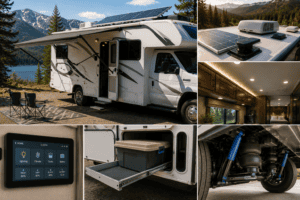
- Solar power: Keeps your batteries charged off-grid so you can camp without a generator. See our guide to the best RV solar kits.
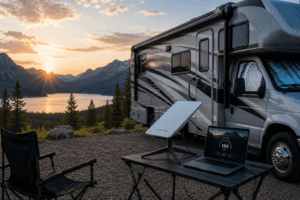
- Starlink internet: Real internet at remote campsites for streaming and remote work. See Starlink for RVs.
The bottom line
You do not need much to start, but you do need the right things. Cover the three hookups with a surge protector, a water pressure regulator and hose, and a sewer kit, then add leveling blocks and wheel chocks, RV-safe toilet paper, and a tank treatment.
That short list protects your rig and makes your first trips smooth. Add the comfort items and the off-grid upgrades as you figure out how you like to camp.
Ready to go deeper on any of these? Browse all our RV gear guides for the tested picks in each category.