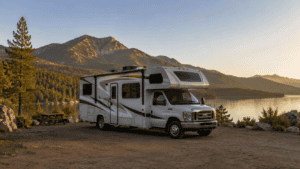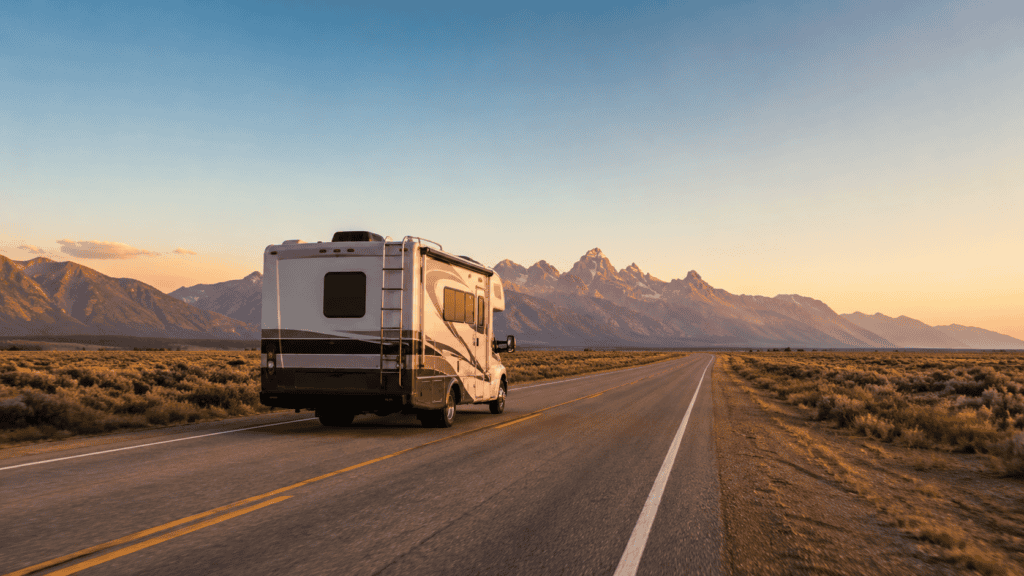
A one-way RV rental lets you pick up in one city and drop off in another, so you can drive a scenic route without doubling back. It is perfect for a cross-country trip or a one-direction adventure, but it comes with a drop-off fee and fewer options, so it pays to know how it works before you book.
Most RV rentals are round trips: You collect the rig and return it to the same place. A one-way rental breaks that rule, which opens up routes that only make sense in a straight line, like San Francisco up to Seattle, or Chicago out to the coast. The catch is that the rental company now has to get that vehicle back, and you pay for the privilege. Here is who offers one-way rentals, what the fee runs, and how to keep the cost down.
What a one-way RV rental is
A one-way, or “point-to-point,” rental means your pickup and drop-off are different locations. Instead of looping back to the start, you end your trip wherever you like, then fly or drive home from there. It suits a few specific trips: A national-park road trip that runs one direction, a relocation where you are moving anyway, or any route where backtracking would waste days of driving.
Where to book a one-way rental
This is the big difference from a normal rental. One-way is mostly a job for the commercial fleets, not the peer-to-peer marketplaces.
- Commercial fleets: Companies like Cruise America, El Monte RV, Road Bear RV, and Escape Campers run branch networks across the country, so they are built to let you drop off at a different location. This is the reliable way to rent one-way.
- Peer-to-peer marketplaces: On Outdoorsy, RVshare, and RVezy you are renting one owner’s personal rig, and that owner almost always needs it back home. True city-to-city one-way is rare there. Some professional or dealer hosts on those platforms do offer one-way or delivery, so it is worth filtering for it, but do not count on it.
What the one-way fee costs
The drop-off fee, sometimes called a relocation fee, depends almost entirely on how hard it is for the company to get the rig back into its fleet. A popular, easy-to-refill route is cheap. A long or one-directional haul to a thin market is expensive, or simply not offered. These are rough 2026 ranges to set expectations, not quotes.
| Example route | Typical drop fee | Why |
|---|---|---|
| Los Angeles to Las Vegas | $150 to $250 | Short, popular, easy to reposition. |
| San Francisco to Seattle | $300 to $450 | Longer coastal run, moderate demand back. |
| New York to Florida | $450 to $700 | Long haul, mostly one-directional in season. |
| Chicago to Los Angeles | $550 to $850 | Cross-country, hard to refill quickly. |
On top of the drop fee, the same costs as any rental still apply: The nightly rate, insurance, and fees. For the full picture of what a rental runs before the one-way charge, see how much it costs to rent an RV.
Relocation deals: The cheap way to go one-way
Here is the insider move. Rental companies constantly need to move rigs back to where demand is, and rather than pay a driver, they list those trips as relocation deals at a steep discount, sometimes just a few dollars a day plus fuel. If your route and dates happen to match one, a one-way trip can cost less than a round trip.
Watch the mileage
One-way trips cover long distances, which makes the mileage allowance matter more than on a local rental. Many one-way rentals include a set number of miles, then charge roughly $0.35 to $0.50 per mile over that. On a 1,500-mile cross-country run, an overage charge adds up fast. Before you book, add up your route mileage and compare it to what the rental includes, and look for an unlimited-mileage option if you are covering real distance.
How to book a one-way trip
- Map your exact route Fix your pickup city, drop-off city, and total miles, since all three drive the price and availability.
- Check the fleets first Price the one-way with Cruise America and one or two others, and note each drop fee separately.
- Ask about relocation deals Tell them your route and dates and ask if a discounted rig-move is available.
- Confirm the mileage and fees Make sure the included miles cover your route, and read the drop-off terms.
- Plan your trip home Book your return flight or ride from the drop-off city, and factor that into the total cost.
Is a one-way rental worth it?
It depends on the trip. For a true one-direction adventure, a coastal drive, a cross-country move, a park-to-park route, the drop fee buys you days you would otherwise spend driving back, and that is often worth it. For anything short or local, the fee and the limited choices make a round trip the better call. And if you can match your route to a relocation deal, one-way can be the cheapest way to travel of all.
New to renting? Start with our RV rental guide for the full walkthrough, or compare the booking platforms in RVshare vs Outdoorsy vs RVezy.